
Facing an injury is frustrating, especially when it threatens your active lifestyle, running performance, or daily comfort. One of the most common questions heard at Core Values Physical Therapy is: "How long will physical therapy take?"
The honest answer is that there is no single universal timeline. However, understanding the factors that shape your recovery can help you set realistic expectations and stay motivated throughout the process. This guide breaks down what influences your PT timeline, what typical recovery looks like for common running and orthopedic injuries, and how a performance-focused approach to physical therapy in Orlando, FL is designed to get you back to doing what you love.
What Influences Your Physical Therapy Timeline?
Several variables determine how quickly you will see meaningful results. Knowing them upfront helps you become a more active and informed participant in your own recovery.
Injury Type and Severity
The nature of your injury is the primary driver of your timeline. An acute muscle strain typically resolves faster than a chronic condition like Achilles Tendinopathy or IT Band Syndrome. Structural injuries such as a meniscus injury or ACL injury naturally require longer, more progressive rehabilitation than a mild ankle sprain.
Your Individual Healing Capacity
Biology matters. Age, sleep quality, nutrition, and stress levels all influence how efficiently your body repairs tissue. Two people with the same diagnosis can have meaningfully different recovery curves based on these factors alone.
Consistency with Your Program
Patients who adhere to their prescribed home exercise programs consistently tend to reach their goals faster. The work done between sessions reinforces the progress made during your appointments. Skipping exercises or ignoring activity modifications can stall your recovery significantly.
Early Intervention
Addressing a problem early almost always leads to a shorter treatment plan. A minor overuse issue caught in its early stages is far easier to resolve than the same problem left unmanaged for months. If something feels off, getting it assessed sooner rather than later is nearly always the right call.

Typical Recovery Timelines for Common Injuries
While every case is unique, the following general timeframes reflect what patients commonly experience for some of the most frequently treated conditions at Core Values Physical Therapy.
Running-Related Injuries
- Achilles Tendinopathy: Tendons heal more slowly than muscles due to their lower blood supply. Recovery typically spans 6 to 12 weeks and centers on progressive loading, eccentric strengthening, and addressing contributing biomechanical factors through running gait analysis.
- Runner's Knee (Patellofemoral Pain): Significant improvement is often achievable within 4 to 8 weeks. Treatment focuses on hip and quadriceps strengthening, movement pattern correction, and refining running form.
- IT Band Syndrome: This common overuse injury generally responds well within 4 to 8 weeks when hip strength deficits and running mechanics are addressed together.
- Plantar Fasciitis: Mild to moderate cases often improve within 6 to 10 weeks with a combination of soft tissue mobilization, targeted strengthening, and load management.
- Shin Splints: With appropriate rest and a structured return-to-running progression, most athletes see resolution within 4 to 8 weeks.
Orthopedic and Spine Conditions
- Low Back Pain: Acute musculoskeletal back pain often responds well within 2 to 6 weeks. Chronic presentations may require a longer course of care focused on neuromuscular re-education and movement pattern retraining to reduce the likelihood of future flare-ups.
- Shoulder Pain and Rotator Cuff Issues: Depending on severity, recovery can range from 6 to 16 weeks. Manual therapy, therapeutic exercise, and dry needling are commonly used to restore strength and range of motion.
- Hip Pain and Hip Impingement (FAI): Conservative management typically spans 8 to 12 weeks, with a focus on restoring joint mobility and building the hip stability needed to return to sport or running.
- Ankle Sprain: Mild sprains often resolve within 2 to 4 weeks. More significant ligament involvement may extend recovery to 6 to 8 weeks, particularly when return-to-sport testing is incorporated to confirm readiness.
These ranges are starting points, not guarantees. Your clinician will refine your expectations based on your specific presentation, goals, and how your body responds to treatment.
Performance Physical Therapy: Beyond Pain Relief
At Core Values Physical Therapy, the goal is not simply to eliminate pain. The aim is to restore full function, build resilience, and support long-term injury prevention so you can perform at your best without constantly worrying about re-injury.
This performance-oriented philosophy shapes every aspect of care. Rather than treating symptoms in isolation, your clinician looks at the full picture: how you move, where your strength deficits lie, and what mechanical factors may be contributing to your problem.
Tools That Support Faster, Smarter Recovery
Running Gait Analysis and Running Form Assessment are central to the performance physical therapy approach at Core Values Physical Therapy. By recording and analyzing your movement in real time, your clinician can identify subtle inefficiencies that place excess stress on your Achilles, knees, or hips. Treating the root cause of mechanical overload, rather than just the painful structure, leads to more durable outcomes.
Functional Movement Assessment and Return-to-Sport Testing ensure that your return to activity is based on objective data, not guesswork. These tools help determine whether your strength, stability, and movement quality are truly ready for the demands of your sport or training program.
Lactate Threshold Testing and Isokinetic / Dynamometer Testing are available for athletes who want a deeper look at their physiological and strength baselines, supporting smarter training decisions alongside rehabilitation.
Treatments That Move the Needle
The treatment toolkit at Core Values Physical Therapy is broad and evidence-informed. Depending on your condition and goals, your plan may incorporate:
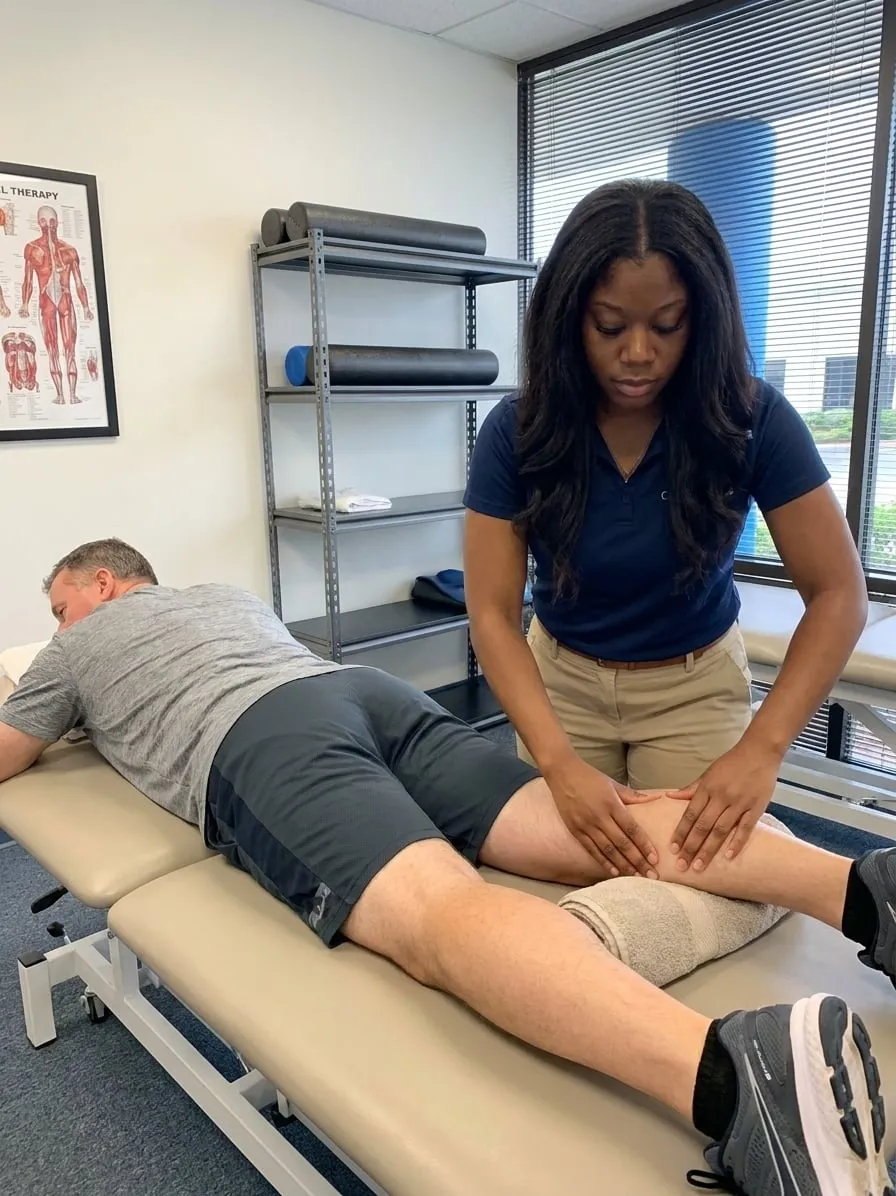
- Manual therapy and joint mobilization to restore mobility and reduce pain
- Dry needling, cupping, and IASTM / Graston to address soft tissue restrictions
- Blood Flow Restriction (BFR) training to build strength efficiently during early-stage recovery
- Plyometrics and return-to-sport progressions to prepare you for the demands of athletic activity
- Therapeutic exercise and strength and conditioning to build the foundation that keeps injuries from returning
- Taping (KT / Athletic Taping) and compression therapy to support tissue recovery between sessions
This combination of hands-on care and targeted exercise is what separates performance physical therapy in Orlando, FL from a passive, symptom-management approach.
Your Role in Getting Better Faster
Physical therapy is a partnership. Your clinician brings the expertise, assessment tools, and hands-on techniques. You bring the consistency, communication, and commitment that make those tools effective.
A few habits that consistently support faster recovery:
- Complete your home exercise program as prescribed, even on days when you feel good
- Communicate openly if something feels wrong, worsens, or changes between sessions
- Respect activity modifications during sensitive phases of healing
- Trust the process, because progress is rarely a straight line, and plateaus are a normal part of recovery
Viewing physical therapy as an investment in your long-term athletic longevity, rather than a short-term fix, tends to produce the most lasting results.
Start Your Recovery at Core Values Physical Therapy in Orlando, FL
If you are ready to stop guessing about your recovery timeline and start making real progress, Core Values Physical Therapy is here to help. Whether you are managing a running injury, working through a nagging orthopedic issue, or looking to optimize your performance, the team in Orlando, FL is equipped to build a plan around your specific goals.
Reach out today to schedule your initial evaluation and take the first step toward getting back to the activities that matter most to you.